In recent years, Jiuhuashan Global Geopark has actively built a comprehensive, multi-layered forest management system—strengthening protection mechanisms while unlocking ecological value.
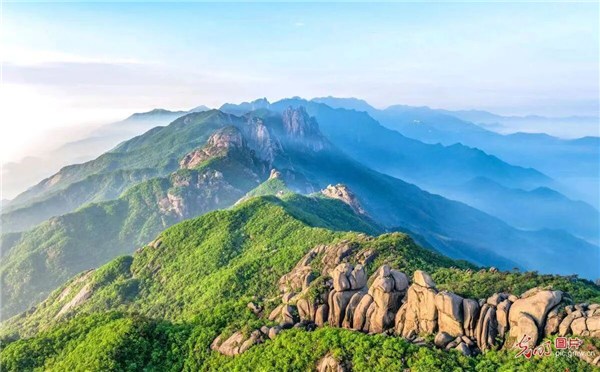
A structured governance framework has been established, consisting of “three-tier forest chiefs + two-level forest chief offices + forestry stations + forest rangers.” Through grid-based management, the geopark has organized a 167-member integrated fire prevention and response team. At the same time, a smart monitoring network—combining a digital command platform, drones, and checkpoint surveillance—has been put in place, with 30 monitoring sites deployed across key areas.A structured governance framework has been established, consisting of “three-tier forest chiefs + two-level forest chief offices + forestry stations + forest rangers.” Through grid-based management, the geopark has organized a 167-member integrated fire prevention and response team. At the same time, a smart monitoring network—combining a digital command platform, drones, and checkpoint surveillance—has been put in place, with 30 monitoring sites deployed across key areas.
Efforts to enhance ecological space have also progressed steadily. Two new green ecological zones have been developed, and Phase II of the Huatai Rhododendron Germplasm Resource Bank has been completed. Leveraging iconic ancient trees such as the Phoenix Pine and Welcoming Pine, the geopark has created 10 prime photography locations, integrating conservation with visitor experience.
On the policy side, Jiuhuashan Global Geopark has implemented compensation measures covering 47,800 mu of public welfare forests, while bringing 16,600 mu of forest land under policy-based insurance schemes. In addition, a specialized expert team for ancient and notable tree protection has been established. Under a refined management approach of “one tree, one steward; one tree, one record,” nationally protected trees receive dedicated care and monitoring.
To address forest health risks, the geopark has developed an annual action plan for controlling pine wilt disease. A total of 21,000 dead or snow-damaged pine trees have been cleared, and 35,800 landscape pine trees have undergone targeted treatment—effectively safeguarding forest resources and maintaining ecological stability.
